More Than a T-Shirt: The Meaning and Craft of the Gamer Real Life T-Shirt Design
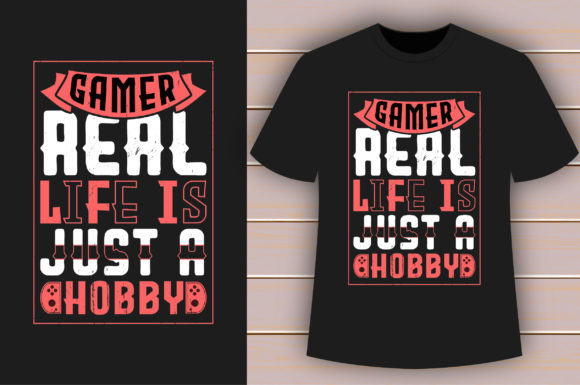
In the vibrant universe of gaming culture, apparel has always served as a badge of identity. Among the countless slogans and graphics, one design has carved out a particularly resonant niche: the Gamer Real Life is Just a Hobby T-shirt. At first glance, it’s a humorous, self-aware statement worn by enthusiasts. But beneath the surface, this design and its creation represent a fascinating intersection of personal identity, digital culture, modern commerce, and artistic craft. Understanding this topic from the ground up reveals not just a popular graphic, but a microcosm of how passion, technology, and business converge in today’s creative landscape.
Decoding the Message: Identity, Humor, and Community
The core phrase, “Real Life is Just a Hobby,” is a tongue-in-cheek inversion of a common societal perspective. Often, gaming is viewed by outsiders as a mere hobby—a leisure activity separate from the “real” world of work, responsibilities, and serious pursuits. This t-shirt design reclaims that narrative by flipping it. It proudly posits that the immersive worlds, camaraderie, and achievements found in gaming constitute a primary, meaningful reality for the wearer, while conventional daily routines are the “hobby.”
This is not necessarily a declaration of escapism, but rather a statement of value and belonging. It serves multiple purposes:
- Identity Signaling: It instantly communicates membership within the global gaming community. It’s a visual handshake between strangers who share a common passion.
- Humorous Self-Reflection: The design carries a layer of irony and self-awareness. Gamers themselves often navigate the balance between their digital and physical lives, and the shirt acknowledges this duality with a wink.
- Challenging Assumptions: It subtly challenges the outdated stereotype that gaming is a trivial pastime. By wearing it, individuals advocate for the cultural and social significance of their passion.
A common misunderstanding is that this slogan represents a negative or dismissive attitude toward real-world obligations. In practice, it’s more about celebrating a major aspect of one’s identity and finding humor in the perceived hierarchy of activities. It fits seamlessly into modern life as a form of expressive communication, much like a band t-shirt or a political slogan, but tailored for the digital age.
From Concept to Product: The Anatomy of a Modern Graphic Design
When a creator announces, “This is my new Gaming T-shirt Design. Welcome to my Graphic Store,” they are inviting you into a sophisticated process of digital creation and entrepreneurship. The offering of the Gamer Real Life Is Just A Hobby T-shirt design as a downloadable file package is a standard model in contemporary creative business. This approach empowers other creators, small businesses, and enthusiasts to produce physical goods without needing advanced design skills themselves.
The Significance of the Digital File Package
The detailed description of the file bundle—4500×5400 High-Quality PNG, 300dpi, Print Ready, 100 Color Changeable, 100% Resizable Editable—is a technical blueprint that underscores the design’s practical relevance. Each specification serves a crucial role:
- High-Resolution & 300dpi: This ensures the graphic is “print-ready,” meaning it has sufficient detail and pixel density to be printed on fabric at any size without blurring or pixelation. This is essential for professional-quality merchandise.
- Print-Ready File: It eliminates pre-production guesswork for printers or DIY crafters, saving time and preventing costly errors.
- Color Changeable & Resizable: Perhaps the most powerful features. They grant immense flexibility. A buyer can adapt the design to match specific brand colors, event themes, or personal preferences. Resizability allows it to be used not just on t-shirts, but on hoodies, mugs, posters, or even large format prints without quality loss.
- Multiple File Formats (AI, EPS, PDF, SVG, JPG, PNG): This compatibility is key. AI and EPS are for professional vector editing in Adobe Illustrator; SVG is for web and scalable vector use; PDF is for universal viewing and printing; JPG and PNG are raster formats for easy use in various software. This suite ensures the design is accessible to everyone from professional graphic artists using advanced tools to hobbyists using simpler programs.
The instruction that “The files are compressed in one ZIP File, You need to extract them” is a basic but important note on digital asset distribution, making the transfer of multiple large files efficient.
The Broader Context: Creativity, Technology, and Micro-Entrepreneurship
This single t-shirt design example illuminates broader trends in how creativity is expressed, shared, and monetized in the 21st century.
A Gateway for Creative Expression and Business
The graphic store model represents a democratization of design. Independent artists can create powerful, resonant artwork—like the Gamer Real Life concept—and distribute it globally at minimal cost. They operate as micro-entrepreneurs. Their “store” might be on a platform like Etsy, Creative Market, or their own website. This fits perfectly into the modern gig economy and the creator economy, where specialized skills (like graphic design) are packaged as digital products for a niche audience.
For the buyer—whether an individual wanting a unique shirt, a small apparel startup, or a content creator seeking merch for their community—this model is equally transformative. It provides access to professional-grade designs without the expense of hiring a custom designer for each idea. It enables rapid prototyping, customization, and testing of products in the market.
Technology as the Enabler
The entire process is underpinned by technology. High-quality digital illustration software creates the initial design. Cloud storage and digital marketplaces facilitate its sale and distribution. The editable vector formats (AI, EPS, SVG) are a direct result of advances in computer graphics. Even the end use, often involving print-on-demand services, relies on automated systems that take these digital files and turn them into physical goods with minimal human intervention. The t-shirt becomes a tangible object born from a fully digital chain.
Education and Skill Building
For beginners interested in design or e-commerce, exploring such design files can be an educational tool. Opening an EPS file in a free vector program can teach about layers, paths, and color separation. Understanding why 300dpi is crucial for print teaches a fundamental principle of digital imaging. This practical relevance bridges the gap between abstract creative concepts and real-world application.
Collecting and Using Designs: A Practical Guide
The invitation to “Don’t hesitate to collect your favorite t-shirt designs from my store” speaks to the curation aspect. In a sea of online content, building a personal or professional library of high-quality, adaptable designs is a smart strategy. Here’s how this fits into daily activities and projects:
- For Personal Wear: You can buy the design, customize the color to your liking, and send it to a print-on-demand service to create a truly personal garment that reflects your unique taste within the gaming theme.
- For Small Business: An apparel entrepreneur can purchase this and similar designs as a foundational inventory. The resizable and editable features allow them to create a cohesive line—different sizes, color variants for different seasons—all from one core design asset.
- For Events and Communities: Guilds, esports teams, or gaming conventions can adapt such a design (changing colors to match team logos, adding small text) to create custom merchandise for members or attendees quickly and affordably.
A key point of clarification is that buying such a design file usually grants a license for personal or commercial use (often specified by the seller), but it does not typically grant exclusive ownership of the artwork. The original artist retains the copyright. This is a standard and fair practice in the digital design marketplace.
Conclusion: A Symbol of Modern Creative Culture
The Gamer Real Life is Just a Hobby T-shirt is more than just ink on fabric. Its design is a culturally resonant message that captures a specific identity. The process of creating, selling, and distributing it as a comprehensive digital file package exemplifies how modern creativity works: it’s scalable, adaptable, and deeply integrated with technology. It supports individual expression, fosters micro-businesses, and educates through practical application. From the humor in its slogan to the technical specs in its ZIP file, this topic shows how a simple idea can evolve into a multifaceted product that connects people, empowers creators, and thrives at the intersection of passion and pragmatism in our digital world.
So, whether you encounter this design as a wearer enjoying its statement, a creator inspired by its market, or a buyer appreciating its technical readiness, you are participating in a contemporary cycle of culture, art, and commerce. It stands as a clear example that in today’s landscape, even a t-shirt design is a nexus of meaning, craft, and opportunity.