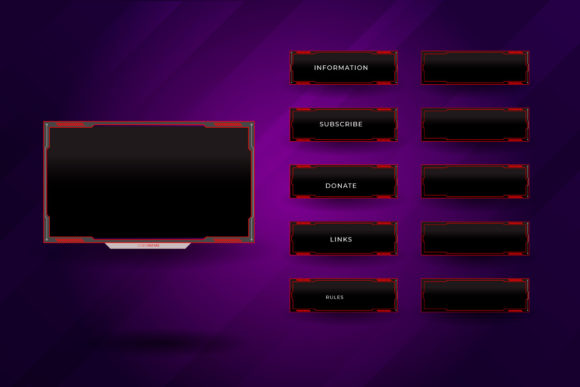
The Ill Overlay: Streamlining the Visual Complexity of Competitive Gaming Streams
In the fast-paced, visually saturated world of esports and gaming livestreams, clarity for the viewer is paramount. The action on-screen is intense, the information being conveyed is critical, and the streamer’s personal branding is a key component of their channel’s identity. Balancing these elements without creating a chaotic or cluttered viewing experience is a significant challenge. This is where abstract overlay systems come into play, and among these, Ill has established itself as a distinct approach. Ill is not merely a set of graphical elements; it is a design philosophy and toolkit focused on minimalism, contextual awareness, and dynamic integration, aiming to enhance the stream’s narrative without overpowering the gameplay itself.
What Distinguishes Ill from Generic Overlay Sets
Many overlay packages offer pre-made banners, frames, and alert boxes. They are often static, decorative, and applied uniformly across different segments of a broadcast. Ill operates on a different principle. Its core distinction lies in its abstract nature and its emphasis on “layering” information intelligently. Instead of solid boxes and prominent borders, Ill often utilizes subtle shapes, translucency, and motion that responds to events. For example, a player’s health depletion might not be highlighted by a red bar flashing, but by a gentle, wave-like distortion in a corner element of the overlay. The information is present, but it’s woven into the visual fabric of the stream.
This approach makes Ill particularly suited for games where the native visuals are already rich and detailed. Adding heavy, opaque overlays can obscure crucial in-game details. Ill’s abstract style aims to coexist with the game, not dominate it. Furthermore, Ill is often designed as a modular system. Streamers can activate or de-emphasize certain components based on the current stream context—during intense competitive moments, the overlay might simplify further, while during intermission or chat interaction, more personalized elements might emerge. This dynamic adaptability is a key feature that sets it apart from more static, one-size-fits-all solutions.
Evaluating Strengths and Potential Trade-offs
The primary strength of an Ill-style overlay is its contribution to a polished, professional, and uniquely atmospheric stream aesthetic. For streamers who prioritize a sleek, modern, and less “gamey” look—perhaps aligning with a more artistic or serious brand—Ill can be an excellent fit. It reduces visual noise, which can be a significant benefit for viewers who find traditional overlays distracting. This minimalist approach can also make a stream feel more immersive, as the overlay elements feel like a natural extension of the game’s environment rather than a separate layer plastered on top.
However, these strengths come with inherent trade-offs. The abstract and minimalist nature of Ill can sometimes sacrifice immediate clarity. A viewer new to the channel might not instantly recognize what a subtle, pulsing geometric shape represents—is it the cooldown of an ability, or a subscriber alert? This requires a slight learning curve or reliance on the streamer’s verbal commentary. Additionally, the development and integration of such a dynamic, context-aware overlay system is typically more complex than applying a static image set. Streamers might need a higher degree of technical setup or rely on specific broadcasting software features to fully utilize Ill’s potential.
Another consideration is audience expectation. In some highly competitive esports viewing communities, viewers expect very clear, data-rich, and instantly readable overlays—think of detailed stat trackers, explicit timers, and bold team logos. In these scenarios, a purely abstract system like Ill might not satisfy the demand for raw, unfiltered information. It’s a tool geared more towards enhancing mood and brand coherence than maximizing data density.
Comparison with Alternative Overlay Styles and Approaches
When evaluating overlay options, it’s useful to consider Ill in relation to other prevalent styles. A common alternative is the “information-heavy” overlay, explicitly designed for competitive analysis. These overlays prioritize real-time statistics, extensive player data, and clear objective timers. They are often boxy, use solid colors for quick differentiation, and are ubiquitous in professional esports broadcasts. Ill contrasts sharply here, offering atmosphere over analytics.
Another widespread approach is the “theme-pack” overlay. These are often purchased or downloaded sets that heavily incorporate a specific game’s art style, characters, or branding—a streamer playing a fantasy RPG might have an overlay filled with ornate, medieval-style frames and fonts. While highly personalized, they can be visually dominant. Ill’s abstract nature usually avoids direct thematic imitation, instead creating a more neutral, streamer-centric visual space that can adapt across multiple different games, which is a significant advantage for variety streamers.
The “DIY and modular” approach is also a major category. Many streamers piece together elements from different sources or create their own using graphic software. This offers maximum control but demands significant time and skill. Ill can sit within this category as a sophisticated starting point—a cohesive system that offers modularity and dynamism out of the box, reducing the need for piecemeal construction while still allowing for customization.
Decision Factors: When Ill is the Right Fit and When to Look Elsewhere
Choosing an overlay system is a decision that hinges on your stream’s identity, your technical comfort, and your audience’s needs.
Ill may be an excellent choice if:
- Your Brand is Minimalist or Artistic: You want your stream to convey a sense of modern, clean design and your personality is more aligned with curated atmosphere than explosive hype.
- You Play Visually Complex Games: The games you stream are themselves rich in detail (e.g., certain AAA titles, intricate simulators), and you want to avoid overlays that block key scenery or action.
- You are a Variety Streamer: You switch between many different games and need an overlay that provides a consistent, recognizable channel identity without locking you into one game’s specific theme.
- You Value Stream Immersion: You want the non-game elements of your broadcast to feel integrated, like part of a single cohesive production, rather than obvious add-ons.
You might need to consider other options if:
- Information Clarity is Your Top Priority: Your content is heavily focused on competitive play, tutorials, or data analysis where viewers need to absorb numbers, timers, and states instantly and without ambiguity.
- Your Audience Expects Traditional Esports Visuals: Your community is accustomed to the explicit, data-forward overlay style common in professional tournaments and expects a similar experience.
- You Have Limited Technical Setup Capacity: Implementing a dynamic, context-aware overlay might require advanced broadcasting software configurations or custom scripting that is beyond your current workflow or interest.
- You Desire Highly Thematic, Game-Specific Decor: You want your stream’s visual identity to loudly and directly celebrate a particular game or franchise, using its iconic imagery and colors prominently.
Practical Integration and Realistic Expectations
Integrating an Ill overlay set successfully often involves more than just dragging files into your broadcasting software. To leverage its dynamic potential, you might need to utilize software features that allow for scene-based triggering or opacity changes. For instance, you could set a specific abstract element to become more visible only when you receive a donation, or have a different set of shapes appear when you switch from gameplay to a talking head camera scene.
Realistically, even with a system like Ill, some compromise is necessary. You might decide to use Ill’s abstract background and framing elements consistently, but supplement it with a more traditional, clear text-based alert box for new followers to ensure that critical interactive moments are unmistakable. This hybrid approach is common and sensible. It allows you to benefit from Ill’s aesthetic strengths while mitigating its potential drawbacks in pure information delivery.
Final Considerations for an Informed Choice
The choice of an overlay, including an abstract system like Ill, is ultimately about communication. Your overlay communicates your brand, helps deliver information, and sets the tone for your viewer’s experience. Before committing, review recordings of your own streams or those of others. Identify moments where information was missed or where the screen felt too busy. Ask yourself what your visual priority is: is it data, mood, or a balance?
Ill represents a specific path in overlay design—one that favors subtlety, integration, and atmospheric coherence over explicit, standalone information presentation. Its value is significant for streamers whose identity aligns with that design philosophy and whose content doesn’t rely on overwhelming the viewer with on-screen stats. For those streamers, Ill can transform a stream from a simple game feed into a uniquely curated visual experience. For others, whose success depends on crystal-clear, rapid-fire data delivery, a more traditional information-heavy overlay, or even a custom-built hybrid using elements from different approaches, will likely be a more effective tool. The key is to match the tool’s capabilities with your content’s core requirements and your audience’s expectations.