The Strategy of Play: How the Gamers Don t Age We Just Level Up Mindset Fuels Modern Growth
The phrase “Gamers Don t Age We Just Level Up” is more than a clever tagline for a popular T-shirt design. It encapsulates a powerful operational philosophy that has permeated business, personal development, and creative culture. For entrepreneurs, creators, and professionals, adopting this mindset isn't about nostalgia; it's a strategic framework for continuous improvement, resilience, and adapting to new challenges without losing core identity.
Leveling Up as a Strategic Imperative
In gaming, leveling up represents progression, increased capability, and access to new tools and environments. It's a measurable outcome of effort and skill. Translating this to professional and creative endeavors means viewing growth not as aging or stagnation, but as an accumulation of experience points. Each project completed, each lesson learned, each customer served contributes to your overall “character sheet” – your portfolio, skill set, and reputation.
The strategic utility of Gamers Don t Age We Just Level Up lies in its reframing of time and experience. It shifts focus from chronological age—often a source of unconscious bias or self-limitation—to earned expertise and iterative evolution. For a marketer, leveling up might mean mastering a new analytics platform. For a freelancer, it could be adding a high-value service package to their offerings. The mindset encourages proactive skill acquisition and system optimization, hallmarks of sustainable success.
Intentional Application in Branding and Communication
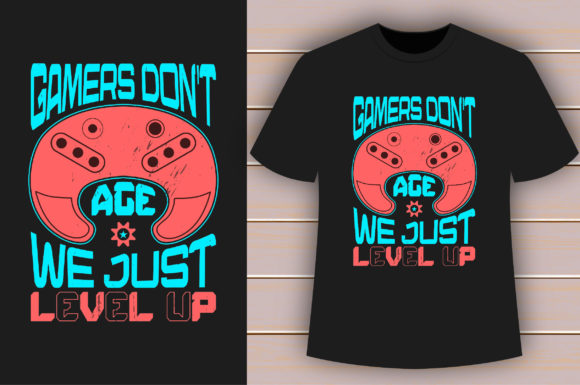
Consider the T-shirt design itself: a product bearing the Gamers Don t Age We Just Level Up motto. For a graphic store owner, this isn't merely apparel; it's a communication device. It attracts a community that shares this values-aligned perspective. Selling such a design strategically positions the store as serving a mindset, not just providing a commodity. This builds brand affinity and customer loyalty far beyond a transaction.
When you apply this philosophy to your own branding, you communicate resilience and forward momentum. It tells your audience that your business or personal brand is in a state of constant, positive evolution. This is crucial for engaging audiences aged 20–50, who often seek partners and providers committed to staying relevant and competent. Using Gamers Don t Age We Just Level Up as a thematic anchor in your messaging can unify your content, from social media to product lines, around a narrative of growth.
Operationalizing the Level-Up Framework
How do you move from concept to practice? Begin by defining what “leveling up” means for your specific goals. Is it revenue thresholds, audience size, product quality, or personal mastery? Establish clear “experience points” – key performance indicators or milestones that, when achieved, concretely signify progression.
Next, design your “quests.” Break down large annual or quarterly objectives into smaller, actionable projects or tasks. Completing each quest should provide a tangible reward: new data, a finished module, a client testimonial, or a refined process. This gamified structure, implicit in the Gamers Don t Age We Just Level Up approach, can enhance motivation and clarify progress tracking for individuals and teams alike.
Practical Examples Across Roles
- For an Educator: Leveling up might involve sequentially integrating new interactive tech tools into courses, each “level” representing a higher degree of student engagement and measurable learning outcomes.
- For a Small Business Owner: Viewing each fiscal year as a new “season” or expansion pack, where operational efficiencies are the stats you improve, and new market penetration is the territory you unlock.
- For a Creator or Blogger: Treating content quality and depth as your primary skill tree. Each major, well-researched article or series represents a level gained in authority and audience trust, building your E-E-A-T (Experience, Expertise, Authoritativeness, Trustworthiness) in your niche.
The Resources to Support Your Journey
The technical specifications of the mentioned T-shirt design bundle mirror the level-up philosophy in a tangible way. Offering 100 color-changeable, 100 resizable editable files in multiple formats (AI, EPS, PDF, SVG, JPG, PNG) provides flexibility and adaptability. It empowers the buyer to customize and scale the asset to fit diverse contexts—from a small web store logo to large-scale print merchandise.
This is a metaphor for strategic resource management. To level up effectively, you need high-quality, adaptable tools that are “print ready” for immediate deployment but also editable for future iteration. Whether it's software, data systems, or content assets, investing in versatile, professional-grade resources prevents you from being bottlenecked by technical limitations, allowing your growth to be unimpeded by poor tooling.
Risks and Considerations: Avoiding Grind Without Purpose
A critical strategic observation is that not all grinding leads to meaningful leveling up. In gaming, pointless repetition without goal alignment is inefficient. Similarly, adopting the Gamers Don t Age We Just Level Up mindset without clear direction can lead to busyness without impact. You might accumulate minor skills or complete numerous small tasks without advancing your core mission or competitive position.
Before relying on this framework, define your “end game” or long-term vision. What does the max level look like for your endeavor? This ensures your quests and experience points are aligned with strategic outcomes, not just activity. Regularly audit your activities: are they yielding stat increases in the right areas? This intentionality prevents the philosophy from becoming a mere motivational slogan and transforms it into a operational filter for decision-making.
Planning for Long-Term Evolution, Not Just a Single Launch
The mindset inherently supports long-term thinking. Gamers Don t Age We Just Level Up implies an endless capacity for growth—there's always a new level, a new challenge, a new meta to understand. Apply this to your business planning by building roadmaps that extend beyond the next product launch or fiscal quarter. Design systems, brand assets, and skill sets that are scalable and evergreen.
For instance, creating a brand style guide that is as comprehensive and editable as the provided design bundle ensures your visual identity can level up with your company, changing and adapting without losing coherence. Investing in learning systems that allow you to continually add new certifications or expertise ensures your personal capability doesn't plateau. The goal is to architect your operations for continuous evolution, making each year a natural progression of the last, not a disjointed reset.
Decision-Making Guidance for Implementation
- Identify Your Core Stats: What three to five metrics truly define your level? (e.g., Customer Lifetime Value, Content Reach, Technical Proficiency).
- Map Your Skill Tree: What competencies support those stats? Prioritize learning and development in that order.
- Design Reward Loops: Create clear feedback mechanisms that show progress. Celebrate “leveling up” when key milestones are hit to reinforce the mindset.
- Ensure Resource Versatility: Adopt tools and assets that are high-quality, editable, and scalable to avoid future friction.
- Regularly Re-evaluate the Meta: The “meta” in gaming is the optimal strategy. Periodically review your industry landscape and adjust your level-up focus to remain competitive and relevant.
Ultimately, Gamers Don t Age We Just Level Up is a strategic lens for viewing progress as a non-linear, skill-based journey. It rejects the notion of decline tied to time and embraces the potential for perpetual enhancement. By applying its principles intentionally—with clear goals, adaptable resources, and a focus on measurable progression—entrepreneurs, marketers, creators, and professionals can structure their growth in a way that is both resilient and relentlessly forward-moving. The level is always there to be gained; the strategy is in knowing which one to pursue next.